• Add comment

    Guest Post by Intern Alex Christensen

    In my last Intern Insight blog entry, I concluded that relationship management should be taught in schools, at the University level. I think I’ve changed my mind, at least somewhat. There are pros and cons to teaching relationship management in school. On the plus side, students would be exposed to the idea of creating a “you-centric” network instead of making their personal networks “all about me.” They would learn the importance of networking and relationship management. But would they really know how to do it?

    You can teach students how to “break the ice” with memorable introductions and elevator pitches. You can even provide outlines for scheduled follow-up, but until they get their "feet wet" in the networking pool, students can’t do much with their newfound knowledge. You can’t just teach relationship management and networking:  Managing your relationships is a skill developed by practice, a lot of practice.

    I've learned this first-hand. As part of the American Marketing Association at the University of North Texas, I went to my first “Meet & Greet” event with the Dallas/Fort Worth AMA last Spring. I would consider myself an extrovert and feel pretty comfortable meeting new people, but when I arrived at the “Meet & Greet,” I became incredibly nervous. I froze. Fortunately, some of my fellow UNT AMA members stepped in, and I was able to join their conversations and make some new connections. I exchanged business cards and followed-up with people via LinkedIn, but I did nothing more. I’m still connected to these people on LinkedIn, but that's it. I did nothing to further any of those professional relationships, so now those connections are of little consequence. I could have done better; I know that now. But the experience taught me more than I ever learned from any presentation on the importance of networking and relationship management.

    I would still like to see relationship management offered to college students, but I know students need more than a course to succeed. Theory is helpful, but I believe practice is essential. To fellow students, or even young professionals, I say, “Practice, practice, practice!” Sign up for networking events, stir up as many quality conversations as you can with others, and fail until you get it right. Failing is the quickest and most memorable way to learn how to do something, and there’s no shame in failure if you learn from it. 

  • Add comment

    Ready-made... Plug and play... Off the shelf... 

    Who doesn't like fast and easy?

    But what about the hard work we do because we continue to "make do" with our work-around methods? Importing contacts, adding details, and organizing them might take some time and effort. Consider, though, how much time you spend writing notes when you're away from your computer then transferring those hand-written notes to your contact management system. Or how much time you spend looking for that little note you jotted down and can't locate when you need it.

    Some applications, the names of which we won't mention, do create a lot of unnecessary work for users, but what an app like VIPorbit mobile relationship manager requires in its initial setup, it makes up for in the time, effort, and energy it saves users on a daily basis.  Whatever system you use, you owe it to yourself to take advantage of the customization options. 

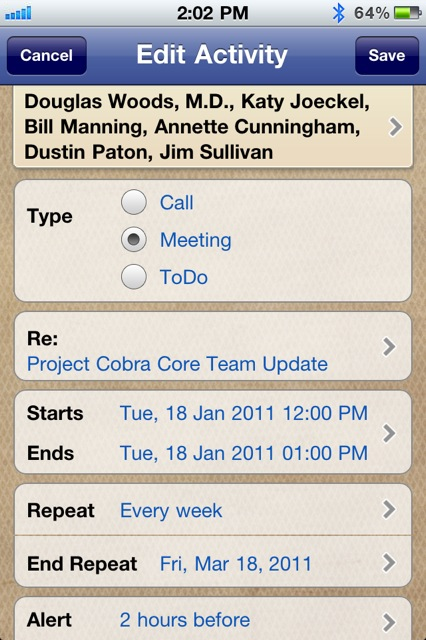
    While VIPorbit Mobile Relationship Manager apps work the moment you download them from the iTunes App Store, there are lots of ways to customize them according to your specific industry or personal use. Last week, Mike Muhney hosted a webinar demonstrating many of the ways VIPorbit can be customized:

    • Creative Orbit Uses (organizing your contacts in meaningful ways, both temporary and ongoing)
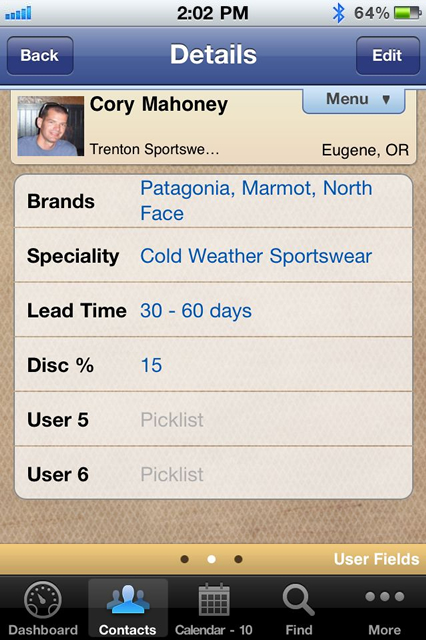
    • Custom Fields to track the information important to you and your business
    • Pick Lists by Activity (Calls, Meetings, and To-Do's)

    Seasoned VIPorbit users or just in the research phase, attendees had the pleasure of an inside look at the powerful customization options available and those actually in use by its co-founder.

    BONUS:

    Several users requested a copy of Mike's Activity Regarding Pick Lists, so we decided to share them here:

    Also, we have uploaded the Webinar recording to the VIPorbit YouTube channel.
    Click here to watch now, or bookmark for later.

    In case you missed the earlier post, Mike shared his personal list of Orbit names, too!

  • Add comment

    Just how lame would it be to ask a new friend, colleague, or even potential client, "So, tell me, what are your hobbies?"

    Very lame, indeed.

    On the other hand, you can get a lot of information about what hobbies people have from the photos on their desk, office walls, or even their Facebook wall (If the two of you are Facebook friends, that is! Stalking is creepy.) Common interests can go a long way toward strengthening bonds. The more someone is "into" a sport or activity that you are also into, the more likely they are to enjoy having that in common with you.

    There's a great new commercial on Tide's Facebook page with the message that the colors of your favorite NFL team are "not just colors; they're an instant bond."


    So, take a relationship management lesson from the laundry detergent trusted by the 32 teams of the NFL and make the most of those "instant bonds." As football season starts, take the time to record which of your contacts share a love of your favorite team. Or for even more fun, which of your contacts support your team's biggest rival?

    Whatever the sport, activity, or interest, make the effort to strengthen the bonds of your relationships. Just don't talk so much smack that come Superbowl Sunday, you are stuck eating crow.


    Special note for you VIPorbit users:  Mike Muhney, our CEO, has created a custom user field for this information. If he's in need of a fourth for golf, he can do a quick search on the "Interests" field for those he's tagged as golfers. (He may or may not have a "Golf" Orbit just for these contacts. We won't tell!) 

    See our Solutions page for other ways to customize VIPorbit.

  • Add comment

    Groups, Circles, or Orbits? While the concept of Orbits may be new for most people, Orbits aren't just our unique name for the ways we sort contacts in VIPorbit.

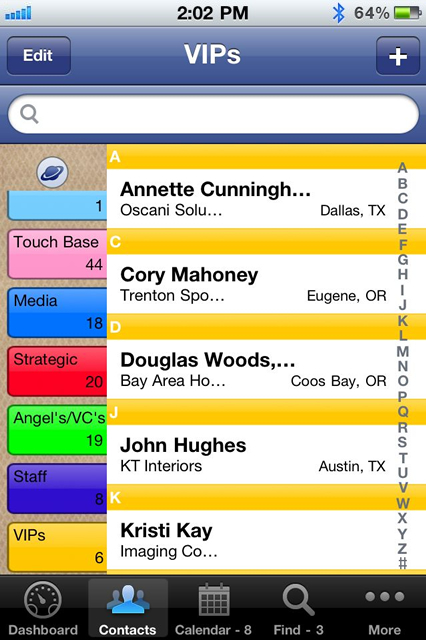
    VIPorbit mobile relationship manager is designed around the concept of organizing contacts into groups, or Orbits. One definition for the word orbit is a person's sphere of resource and influence. In the app, these Orbits can be created for temporary or long-term use. You can create an Orbit by selecting one or more contacts, from search results, or by drag-and-drop from the "All" contacts list or any other existing Orbit.

    What you can do with an Orbit also serves to set Orbits apart from the Circles and Groups out there. Did you know, for instance, that you can group text or email an entire Orbit with messages that don't look like they went out to everyone? You can also apply a change to the contact records of everyone in an Orbit with one simple edit. Orbits are very powerful tools for both organization and communication. 

    To help you make the most of your Orbits, we've recently updated our tutorial videos, including the videos that demonstrate how to organize your contacts by Orbit. Watch one today:

    After last week's inaugural webinar, we had several requests to share Mike Muhney's list of Orbits (he has 54 of them). So, for all of you who would like to take a peek at Mike's list, here you go. 


    In our next Webinar, "Customizing VIPorbit: Make Your Relationship Manager Work the Way You Do," VIPorbit CEO Mike Muhney will show the various ways VIPorbit can be customized: 

    • Creative Orbit Uses 
    • Custom Fields 
    • Pick Lists by Activity 
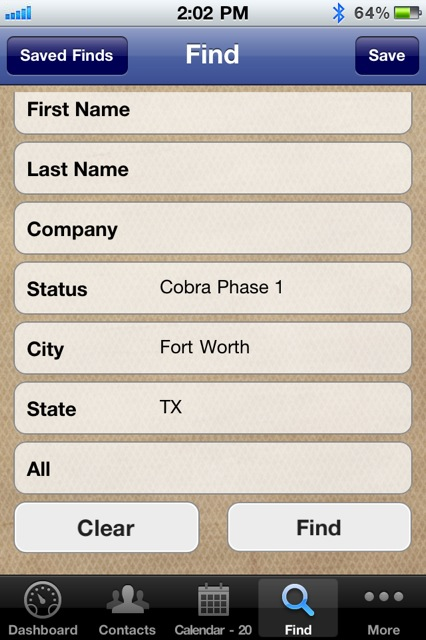
    • Advanced Search Options 
    • Custom Reports 
    • ...and more! 

    Whether you've been using VIPorbit for a while or are just in the research phase, you'll benefit from this inside look at the powerful customization options available!

    What:  "Customizing VIPorbit" Webinar
    Date:  Thursday, September 6, 2012
    Time:  2:00-3:00 p.m. Central Time

    Click here to register.

  • Add comment

    As a newbie in the business world, I’m just beginning to see the importance of relationship management. I’ve always valued my friendships, but my first steps into a post-college world have only solidified my opinions of the value of quality over quantity. If I want to have a successful career in any field, the thing that matters most is how I treat people. I’ve had a lot of opportunities come my way just because of the rapport I’ve established with others.

    Those of my generation need to understand the value of building and nurturing relationships. The Internet has had a negative impact on people's approach to building relationships. I think social media skews our perceptions; value is placed on quantity and numeric measurements, such as the number of friends, followers, and subscribers one may have. 

    The meaning of the word relationship has also changed. People think that just clicking an “Add Friend” or “Like” button creates a relationship. Connecting with others on a social media platform may begin a relationship, but that relationship doesn’t mean anything unless a person takes measures to build on the initial connection. I know I’ve been guilty of this; I’ve been to networking events, gotten business cards, connected on LinkedIn, and that was the sum of my interaction with them. 

    In the past year, I’ve come to understand that’s not how it works. Sure, I met some great people, but I did nothing to establish a real connection. I got nothing out of those bonds I only began to create. This actually hinders professional growth rather than helps it. As for me, I have changed the way I approach new relationships because of these experiences, but I am in the minority. 

    Today’s students, not only business majors, would benefit from courses on relationship management. Whether a whole class or just a segment of a course’s curriculum that focuses on the why and how of building effective professional relationships, it would go far toward better equipping tomorrow’s professionals. The ability to manage relationships enables success and inspires people to want to help others as they realize the long-term benefits of making investments in others. 

    Some might say that this idea ridiculous because creating value in friendships and relationships is common sense. From what I observe on my university campus, it’s not common at all. Most young people have no idea how to do it. Technology, the Internet, and social media foster the idea of a “me-centric” universe over a “you-centric” one. 

    Unless we do something to change the mindsets of younger generations, we’re going to continue to create a very selfish world. My generation doesn’t have the experience of using pen and paper to manage relationships, much less the days of meeting face-to-face. I think that truly puts us at a disadvantage. If we don’t understand the building blocks of relationship management, the foundation of our careers could crumble beneath us.

  • VIPorbit People buy from people they like & trust. @Inc shares "6 Ways to Enhance Credibility." Using @VIPorbit is #7! t.co/DLM0v8lSxw
    11 hours 17 min ago.

News & Special Offers